
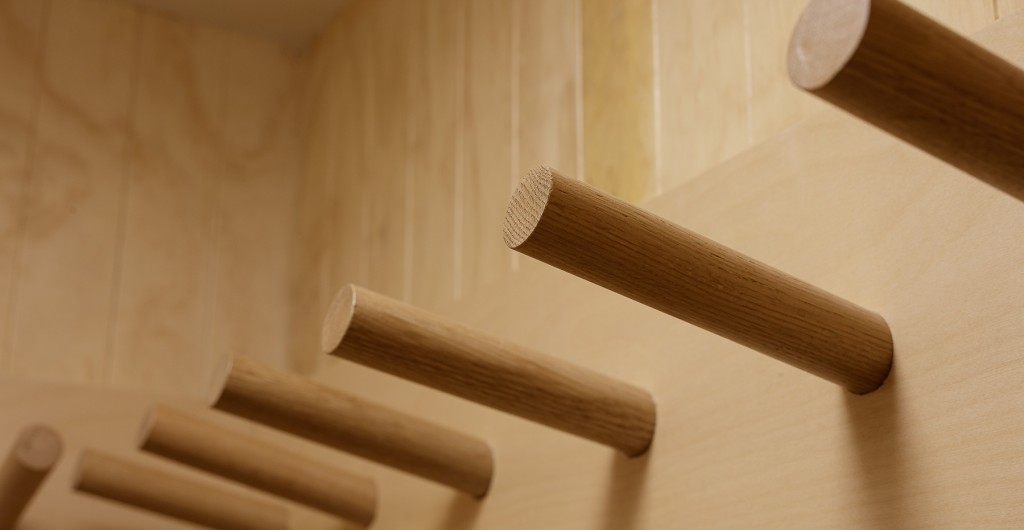
The use of wood in construction and interior architecture is nothing new. Indeed, the use of wood goes back to the dawn of mankind, with timber homes from England dating back some 10,000 years to the Mesolithic Period, at the tail end of humankind's hunter-gatherer existence. But while wood was largely used through necessity and because of the lack of alternatives, today it’s used for other reasons, some of which you may find surprising.
Biophilic Design
A common feature of modern architecture is biophilic design, a philosophy that uses elements of the natural world, like wood, in architecture. The name itself comes from ‘biophillia’, a term coined by psychologist Erich Fromm in the early 1960s, and the thinking behind it is that humans seek connections with nature. Only, this isn’t just thinking. It’s science.
Numerous studies have successfully proven the use of wood in interior architecture relieves stress. For example, a 2010 study from the University of British Columbia found trial subjects placed in a series of different office environments had a lower sympathetic nervous system (i.e. flight or fight response) when placed in offices with wooden design elements.
This is supported by Australian research which found the presence of wood in offices increased overall employee satisfaction and contributed to higher levels of productivity. Crucially, we should note the research defined the presence of wood as being both visible and immediately obvious. That is, any wooden furniture or architectural elements made from wood had a natural finish, with the wood grain clearly visible and unobscured by paint.
This makes sense. Shinron-yoku is the Japanese practice of ‘forest-bathing’ that uses immersion in nature and exposure to trees to lower blood pressure and boost the immune system. So if a walk in the woods is good for us, then bringing elements from those woods inside must be good for us, too.
Sustainability & Carbon Storage
Forests are carbon sinks and play a crucial role in removing carbon dioxide (CO2) from the atmosphere. That carbon is then locked in the trunks and branches of trees. Importantly, much of it is retained when the trees are harvested and the timber used to craft furniture and other products.
For building projects seeking a Green Star rating, the use of wood becomes important as a mechanism to reduce embodied carbon, reducing the overall carbon footprint of the building and becoming an important tool for attaining certification.
There are ongoing benefits, too. Wood is recyclable and can be used again. There’s no data for New Zealand but the Wood Recyclers Association in the United Kingdom estimates 60% of the UK’s waste wood gets recycled.
Indoor Air Quality
Wood is a hygroscopic material. That is, it can extract moisture from air (it can release it too). When this happens humidity is better regulated and in the confines of an office environment, it makes for a more pleasant workplace. This process improves the overall indoor air quality and we know there is a direct link between air quality and productivity. Indeed, the New Zealand Ministry of Education sets air quality rules for classrooms, drawing on the research from the University of Manchester which established a cause and effect relationship between air quality and a student's ability to learn. So maybe those old wooden school desks served another purpose other than something to carve your name into!
Acoustic Performance
Timber has inherent acoustic properties and can absorb sound. This is because wood is both porous and fibrous. Sound waves can enter the material and their energy is then converted from ‘sound energy’ to ‘heat energy’, with most of it being dissipated by the wooden fibres and only a small amount being reflected back and escaping as sound.
In busy environments with poorly designed acoustics, sound is amplified to levels that can interrupt concentration and even change moods. The impact of sound exposure is cumulative and listening fatigue is a common phenomenon in modern working environments, with workers struggling to cope with a constant audible overload. Wood’s natural sound dampening properties helps take away reverberation and echos, and provides relief from that audible load. In a properly designed workspace, this not only makes everything sound better, but it makes occupants feel better too.
Superior Strength-to-weight Ratio
Wood is exceptionally strong for its weight and when used properly, offers advantages over other materials and alloys such as steel. We say used properly because if wood is being used to support loads, it’s important to remember that unlike metals, wood is an orthotropic material. That is, its properties are independent in three dimensions (longitudinal, tangential, and radial). It also displays viscoelasticity, meaning it can deform over time because of its elastic (spring-like) and viscous (fluid-like) characteristics under load.
What the above really means is that you have to know how to use wood to make the most of its natural advantages. And when you can do that, wood becomes incredibly useful in everything from structural framing to furniture. Talking more specifically about furniture, this is where the art of joinery really comes to the fore, with the use of dovetail, mortice and tenon joints etc, adding structural stability and increasing both durability and longevity.
Adaptability
Almost anything can be made from wood. It’s an obvious advantage although the same argument might be put forward for other materials, such as plastic. However, wood has a key advantage - it can, and has, been adapted to suit architectural and design trends through the ages. Whatever the current vogue for design might be, wood will be able to be used in some shape and form. Moreover, using wood usually adds a timeless quality that resists ageing so the design itself carries a broader appeal across generations. So while it can reflect the style of the day, wood will also (usually) find an audience beyond that period. Maybe it has something to do with the connections with nature but it’s safe to assume more compliments have likely been uttered in appreciation of wooden elements from whatever period than about formica kitchens from the 1950s.
Thermal Comfort
Wood may not retain heat as well as other materials but it certainly feels like it does. This is because wood does a remarkable job of maintaining a surface temperature that’s generally consistent with the overall temperature, making wooden bannisters nice to touch and wooden floors feel warmer than concrete or stone. This is further aided by the fact that we generally perceive wood to be warming. Step inside a log cabin in Alaska and you’re just as likely to remark on its coziness as you are the actual temperature should it be winter and there’s no heating.
Talking of Alaskan log cabins, one of the reasons Dick Prenneke (Alone in the Wilderness) made his home from wood was because of the natural thermal insulation properties it has. It might not be the best but it’s better than plenty of other materials. Of course, he didn't have many other options for material given the remoteness of his location. However, it certainly says something that his cabin remains intact today, visitable by eager visitors who are willing to endure the plane ride to the Alaskan wilderness.
Of course, you might levy the argument that we’re biased and have a vested interest in extolling the virtues of wood. And you’d be right. But even so, we think you’ll agree, given all the above not-so-obvious benefits, that wood really is a quite wonderful material.
As for the obvious benefits? Well, wooden joinery can certainly look amazing.